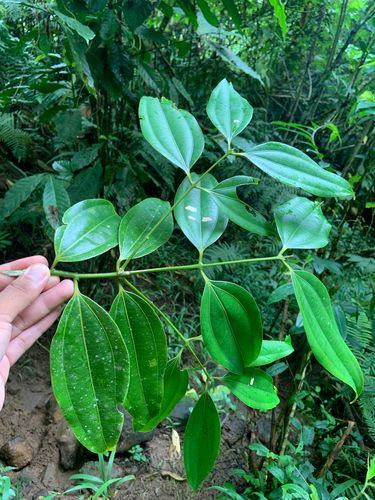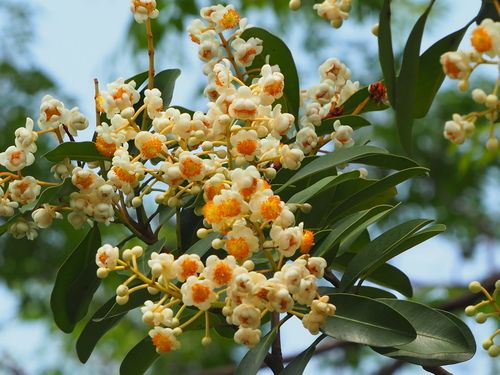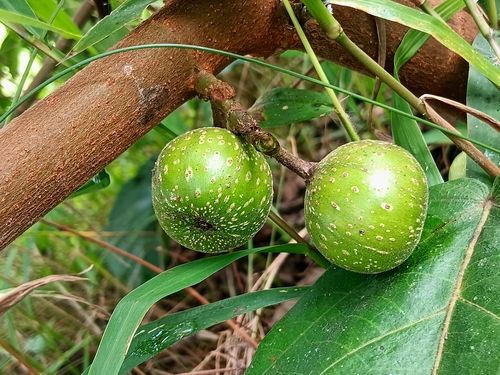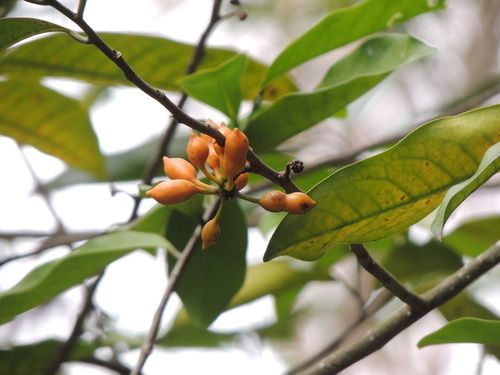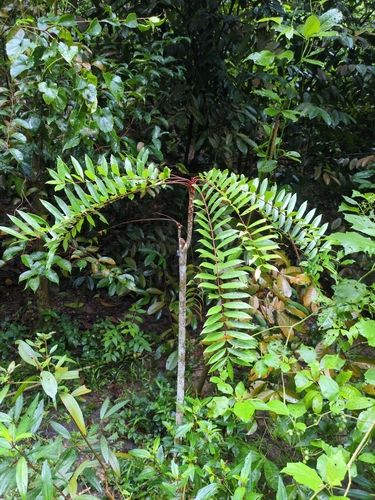
tongkat aliEurycoma longifolia
Rarely found, harvest takes roots or bark, its habitat is under pressure
Many of the Philippines' healing plants are still gathered from the wild. This atlas shows which are most at risk, where they grow, and why, so that harvesters, rangers and researchers know where to look first.
On every check we ran, these 5 come out near the top. Open one to see why, and where it grows.
Each plant is judged on three things. A plant that does badly on all three rises to the top.
Fig. 1 Rarity
How seldom it turns up where botanists have looked, and how small its native range is.
Fig. 2 Harvest
Whether harvesting takes roots, bark or the whole plant, from a slow-growing plant taken from the wild.
Fig. 3 Habitat
Whether the places it grows are unprotected, in provinces losing forest.
Climate change is shown on every plant's page but does not change the order: the warming expected by 2050 is about the same, +1.5 °C, everywhere these plants grow. How it works
Four steps, whether you are planning a survey or deciding what to gather.
Search by its Filipino or scientific name.
The atlas shows the areas it was recorded in, and which are protected.
Open the atlasEach plant's page explains its rank in plain words, with every source.
See tongkat aliA one-page summary to print or share with your team.
Example briefNo dataset records how much of any plant is harvested. The atlas ranks plants on what can be measured, and shows how sure each rank is.
Whether a species is threatened with extinction is decided by the IUCN and DENR. Their categories are shown where they exist and never invented.
Places are shown as areas of about 250 km² or more, so rare plants are not easier to find and take.
Traditional uses are cultural context only.